| Welding Data >> Welding Data |
|
SAFETY PRECAUTIONS FOR WELDING AND CUTTING POLYURETHANE FOAM FILLED ASSEMBLIES
2-30. HAZARDS OF WELDING POLYURETHANE FOAM FILLED ASSEMBLIES
WARNING
Welding polyurethane foam-filled parts can produce toxic gases. Welding should not be attempted on parts filled with polyurethane foam. If repair by welding is necessary, the foam must be removed from the heat-affected area, including the residue, prior to welding.
a. General. Welding polyurethane foam filled parts is a hazardous procedure. The hazard to the worker is due to the toxic gases generated by the thermal breakdown of the polyurethane foam. The gases that evolve from the burning foam depend on the amount of oxygen available. Combustion products of polyurethane foam in a clean, hot fire with adequate oxygen available are carbon dioxide, water vapor, and varying amounts of nitrogen oxides, carbon monoxide, and traces of hydrogen cyanide. Thermal decomposition of polyurethanes associated with restricted amounts of oxygen as in the case of many welding operations results in different gases being produced. There are increased amounts of carbon monoxide, various aldehydes, isocyanates and cyanides, and small amounts of phosgene, all of which have varying degrees of toxicity.
b. Safety Precautions.
(1) It is strongly recommended that welding on polyurethane foam filled parts not be performed. If repair is necessary, the foam must be removed from the heataffected zone. In addition, all residue must be cleaned from the metal prior to welding.
(2) Several assemblies of the M113 and M113A1 family of vehicles should not be welded prior to removal of polyurethane foam and thorough cleaning.
Authorization Letter
|
|
|
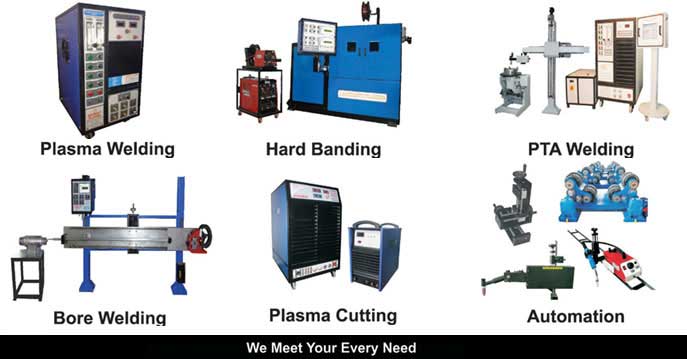
Plasma Cutting Machines
For precision cutting of Stainless steel, Aluminium and all other Ferrous and Non-ferrous metals.
Stainless Steel cutting upto 150 mm thick plates.
Straight dross free cuts with minimum kerf width at high speeds.
Mechanised cutting with CNC tables / robots.
|
|
PTA Hardfacing & Cladding
PPAW (PTA) is a process that deposits very precise coatings of perfectly controlled alloys on mechanical parts that are subject to intense wear, significantly extending their service life.PTA technology is particularly effective in protection against corrosion, thermal shock and abrasion.
|
|
Welding Automation
- Repeatable High quality welding.
- Increase Productivity.
- Decrease dependance on welder skill.
|
|
Plasma Welding
-Less sensitivity to changes in Arc length.
- Recessed electrode reduces the possibility of tungsten inclusions in the weld and can substantially increase the period between electrode dressings resulting in increased life.
|
|
Micro Plasma Welding Machines
- Precision welding of minature parts
- Controlled Arc at low currents
- Automated welding at low currents.
- With built-in Pilot arcing system.
|
|
Micro Tig Welding Machines
- Precision welding of minature parts
- Ideal for smaller repair or assembly work.
- Built-in high frequency ignition.
|
|
Welding Inverters
Light weight & compact : 80% less weight compared to conventional machines.
|

|